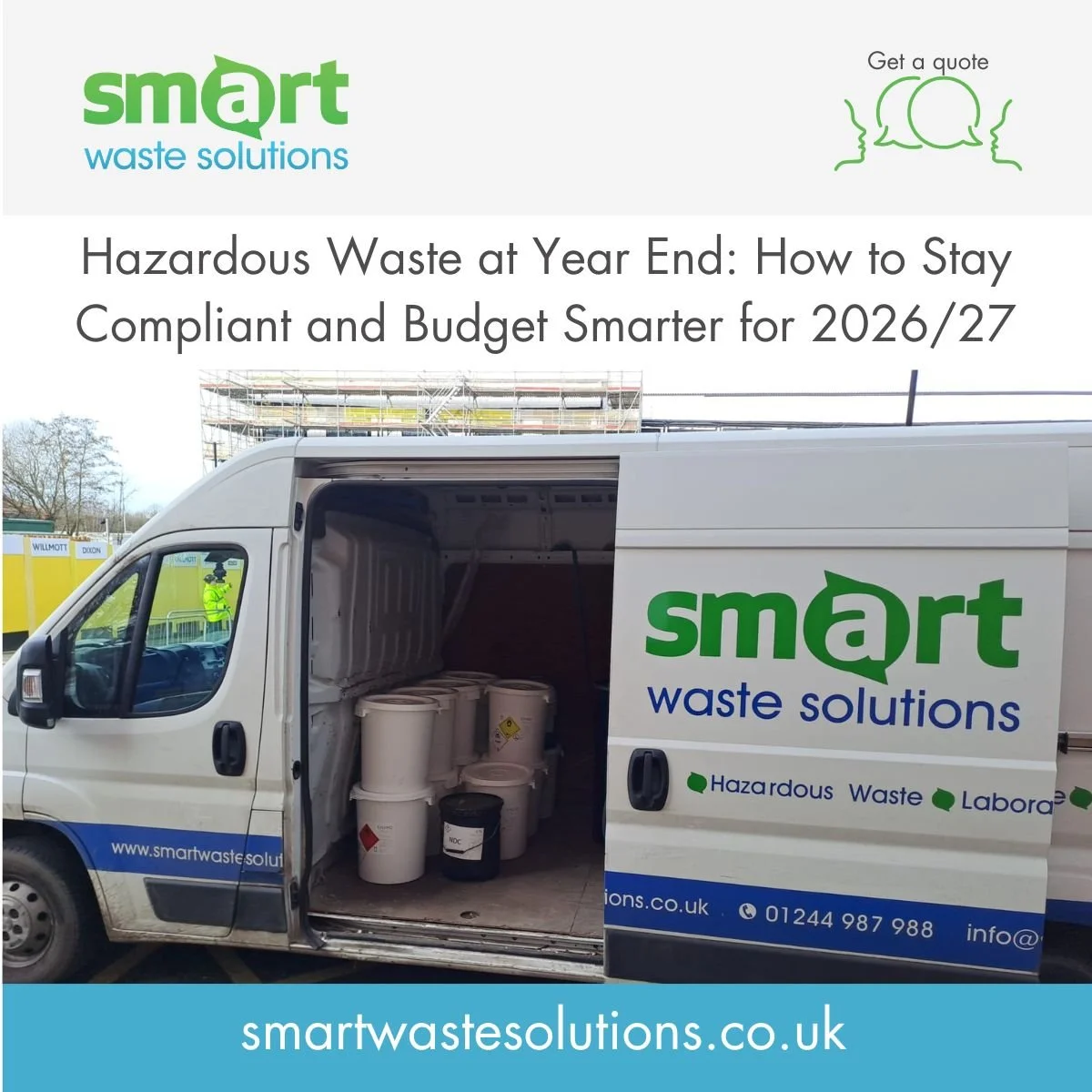
Hazardous Waste at Year End: How to Stay Compliant and Budget Smarter for 2026/27
For many businesses, the end of the financial year is all about accounts, reporting, and planning ahead. But if your organisation produces hazardous waste, year-end is also the perfect time to review compliance and control your hazardous waste management costs for the year ahead.
With regulatory changes coming in 2026, including digital waste tracking and increasing scrutiny around waste classification, businesses that prepare early will avoid compliance risks and unexpected costs.
In this guide, we’ll explain how to review your hazardous waste processes at year end, stay compliant with UK regulations, and build a smarter waste budget for 2026/27.
Why Year-End Is the Best Time to Review Hazardous Waste
Every business that produces hazardous waste has legal responsibilities under the Hazardous Waste (England and Wales) Regulations 2005, which require waste to be correctly classified, stored, transported and documented. (GOV.UK)
At the same time, regulatory monitoring is increasing. In the 2024–2025 financial year, regulators carried out over 2,100 waste classification audits to ensure waste producers were compliant. (GOV.UK)
Year-end reviews allow businesses to:
Check hazardous waste documentation and consignment notes
Ensure waste is being correctly classified
Identify unnecessary disposal costs
Prepare for regulatory changes
Set a realistic waste management budget for the next financial year
For many companies, this review alone can reveal significant cost savings.
Common Hazardous Waste Compliance Risks
Many businesses unknowingly fall short of compliance in a few common areas.
1. Incorrect Waste Classification
Misclassifying hazardous waste as non-hazardous is a major compliance risk. Not only does this create environmental hazards, but it can also lead to regulatory penalties and higher costs later.
Correct classification requires identifying waste using the appropriate European Waste Catalogue (EWC) codes and understanding its hazardous properties.
2. Incomplete Documentation
Every movement of hazardous waste must be recorded using a consignment note. These records provide a full audit trail from producer to disposal facility.
Missing or incorrect paperwork can create compliance issues during audits.
3. Poor Storage and Handling
Hazardous waste must be stored safely to prevent contamination or environmental damage. For example, waste sites must ensure materials are stored securely and on appropriate surfaces with drainage controls where necessary. (GOV.UK)
Improper storage can result in enforcement action or costly clean-ups.
Upcoming Changes Businesses Should Prepare For
One of the biggest changes on the horizon is the UK’s mandatory digital waste tracking system, which is expected to become compulsory from April 2026. (dynesolicitors.co.uk)
This new system will:
Digitise how waste movements are recorded
Improve visibility of waste from production to disposal
Make it easier for regulators to identify non-compliance
For businesses, this means accurate waste data and record-keeping will become even more important.
Preparing early will make the transition much easier.
How to Budget Smarter for Hazardous Waste in 2026/27
Waste management doesn’t have to be a sunk cost. With the right planning, businesses can often reduce costs while improving compliance.
Here are a few practical strategies.
Audit Your Waste Streams
Start by identifying exactly what hazardous waste your organisation produces.
A waste audit can reveal:
Over-classification of waste (increasing disposal costs)
Opportunities for recycling or recovery
Inefficient collection schedules
Across the UK, over 7 million tonnes of hazardous waste are moved each year, with a significant portion sent for recovery rather than disposal. (GOV.UK)
Recovery options can significantly reduce costs.
Consolidate Collections
If hazardous waste is collected too frequently, businesses often pay unnecessary transport fees.
Optimising collection schedules can:
Reduce collection costs
Improve storage efficiency
Minimise disruption to operations
Improve Staff Training
Employees who handle waste should understand:
Hazardous waste identification
Storage requirements
Spill response procedures
Documentation processes
Better training reduces compliance risks and improves operational efficiency.
Work With a Specialist Waste Partner
Navigating hazardous waste regulations can be complex, especially with new digital tracking requirements approaching.
A specialist provider can help with:
Waste audits
Compliance support
Hazardous waste classification
Cost-effective disposal and recovery solutions
This ensures your business stays compliant while controlling costs.
Year-End Hazardous Waste Compliance Checklist
Before the financial year closes, ask yourself:
✔ Are all hazardous waste streams correctly classified?
✔ Are consignment notes complete and stored correctly?
✔ Are storage areas compliant with regulations?
✔ Are waste collections optimised for cost and efficiency?
✔ Is your business prepared for digital waste tracking in 2026?
If you can confidently answer yes, you’re already ahead of many organisations.
Final Thoughts
Hazardous waste compliance isn’t just about avoiding fines — it’s about protecting your business, your staff, and the environment.
A simple year-end review can help you:
Strengthen compliance
Reduce operational risks
Control waste management costs
Prepare for upcoming regulatory changes
With 2026 bringing major shifts in waste tracking and reporting, now is the ideal time to review your processes and plan ahead.
Need help reviewing your hazardous waste processes before the new financial year?
The team at Smart Waste Solutions can help you stay compliant, reduce costs, and prepare for the future of waste management. Contact us
